
Three quick bites — then chew, breathe and swallow:
Bats, Tattoos & Zoos — While oft feared, bats are essential for environments and in PA, one bat rescue teamed up with a motley crew to do good by our winged mammalian cohabitants.
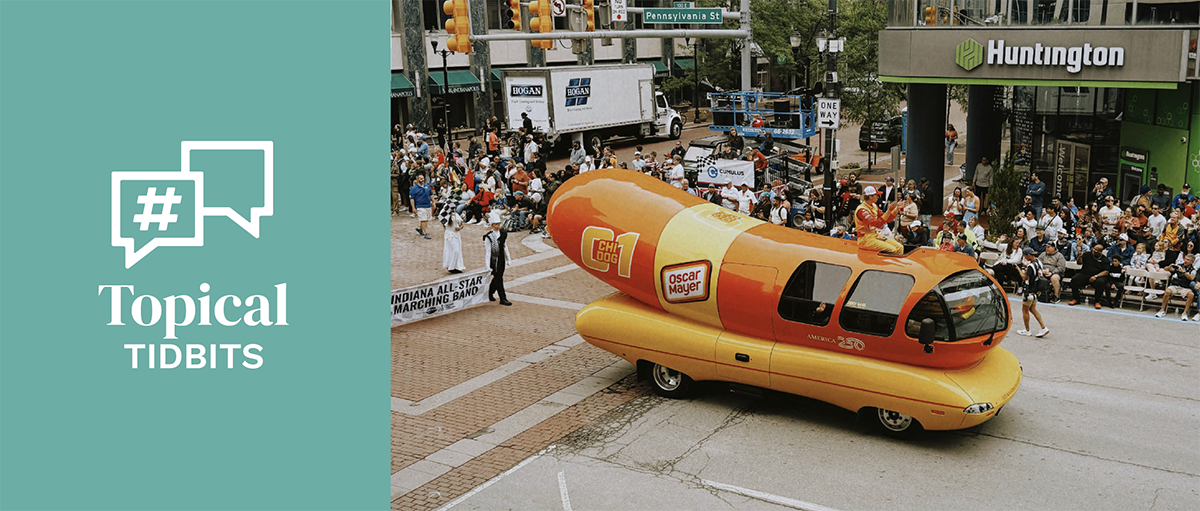
For the Wiener! — It’s older than Trump and twice as potent! The Wienermobile turns 90, and the OG marketing stunt has millions singing about their glizzies.
Digital Cities — Schoolkids in 55 countries are Minecrafting new realities for their hometowns and pitching the digital twins for a chance at $200K to re-dev real-life spaces like abandoned riverbanks, dark alleys and dump sites.
Photo credit: LOGAN WEAVER | @LGNWVR on Unsplash
n a digital world where we’re constantly nagged by technology, pestered by pop-ups and ragescrolling thru feeds, there’s nothing more welcome than a piece of handheld realia, or the comforting lilt of a loved one’s penmanship. This week we’re bringing together two more components of a broader story; and deep yearning for genuine authenticity. This winter we wrote about “nostalgia” as reflex to modern society, and the trend runs deeper. This week we’re bringing you two new finds that fit the brief, and our brains are running on double-time thinking about all the ways that districts may incorporate some homespun sincerity into their efforts.
First up, we’ve got a digital application that empowers you to turn your own handwriting into a font! Fast Company tipped us off to this amazing FREE app that digitizes your hand into a world-worthy typeface to customize myriad things. The process appears pretty straightforward, and in about 15 minutes you can transform your digital assets into handmade love notes to the community, personalized event invitations, or even imagine your own writing ten feet tall on a mural. The applications are endless, and you can start right here at FontCrafter today for free.
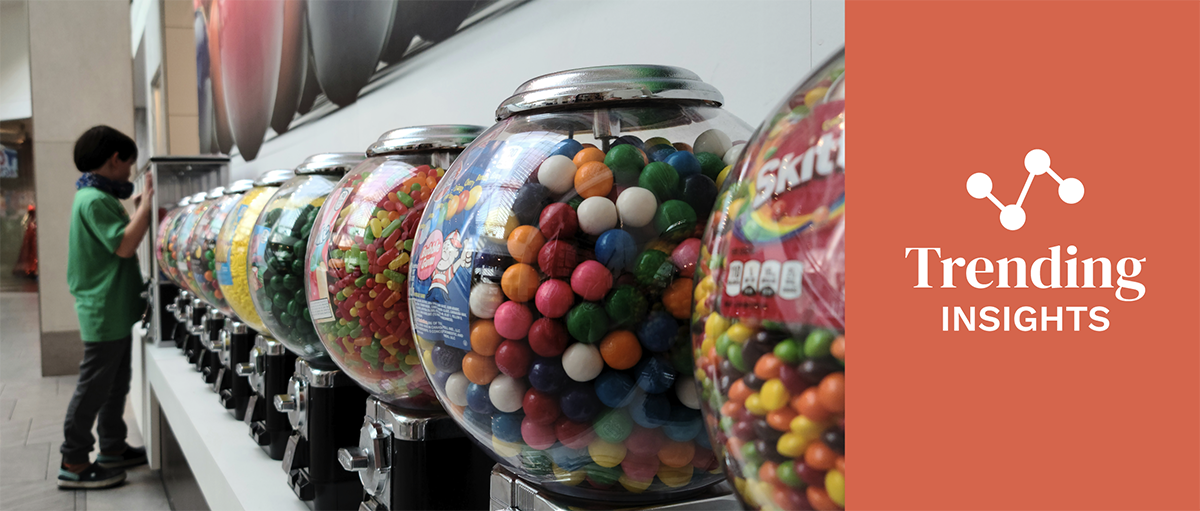
This next one steals the show, and could be the centerpiece in your placemaking efforts. Indie artist Anastasia Inciardi (Ah-nuh-stah-see-ah In-see-are-dee) is a relief printmaker and the inventor of the Mini Print Vending Machine. The format is familiar. It’s a coin-driven vending machine like you’d buy bubble gum from outside a supermarket, except that inside, the prizes are lovingly handcrafted pieces of linocut-driven risographs instead of gum or cheap plastic schlock. Risograph printing originated in Japan in the 1980s, and Anastasia’s pieces are perfectly-imperfect pieces of realness that pop out when four quarters are inserted into the dispenser. The entire experience is analog, authentic and makes for such a fabulous story — or a memento from your trip downtown. The best part is, Inciardi’s little “joy machines” are poppin’ out prints nationwide, and you can request one for your offices, a district business or your next special event.
In an age when both fast and forgettable are the name of the game, a gentle shift from digital slop to sentimental memento is as simple as a handful of coins, and the gleeful squee of discovering which printed prize you get instead of gumballs. Or imagine seeing your grandmother’s script on her favorite brownie recipe emblazoned on a billboard downtown. That’s worth more than a lifetime of 15-second ad spots and never-ending, vacuous Reels. Hooray for nostalgia!
Photo credit: by Pete Alexopoulos on Unsplash

… that recurring events can punch well above their weight when it comes to impacts and outcomes? Case in point, this week we’re taking a look at three signature events from across the country that bring hundreds of thousands of visitors, support local economies and ultimately do their duty and drive millions in incremental dollars into ratepayers’ purses and tills — in mere days!
First up, let’s take a looksee at Picklesburgh, the signature recurring event in Downtown Pittsburgh that really wallops! The Downtown Partnership of Pittsburgh has hosted Picklesburgh every year since 2015 (with the pandemic exception of 2020), and each year the event grows incrementally. They’ve expanded the footprint, added more vendors, added additional days of programming, and even added a wildly popular pickle-themed dine-around component to the lauded activation. In PA’s second largest city (population ~ 370K, but roughly a 2.42 million MSA), Picklesburgh means big business! With the 2026 event now in the books, the Downtown Partnership has bragging rights to another epic incarnation of the Heinz-inspired hometown festival. Reporting from USA Today tells us that this year, Picklesburgh saw nearly 200K visitors over the four-day sprint, which also included 54 participating local businesses. One new business reported a jaw-dropping 700% increase in sales over a typical Thursday thru Sunday timepart! We haven’t yet seen total economic impacts reported out yet, although we expect the popularity of this seminal Yinzer event to continue to grow and pack a significant economic boost in the arm for small biz in Steel City.
“One new business reported a jaw-dropping 700% increase in sales…”
Next up, we ask you to LOOK UP and check out Let’s Glow SF, a signature holiday event that turns Downtown San Francisco into a massive, meandering feast for the eyes, ears and senses for ten days every December. In a city of about 826K residents, with an MSA of approx 4.6 million, the Partnership was in the throes of combatting the ever-annoying “doom loop” narrative that needed to be flipped on its head. Today, five years in, and five Let’s Glows under their belts, Downtown San Francisco has turned the bootstrapped projection mapping event into a sprawling festival that has doubled from four illuminated iconic buildings in the district itself — into eight iconic buildings across the city’s core, including adjacent districts, transforming them into colossal, colorful canvases featuring work by 19 artists from around the globe.
We’ve had a hand in Let’s Glow SF since its inception, and we’ve done the math to track the impacts. To date, with five instances of Let’s Glow SF mapped and tracked, the district has cumulatively drawn over 369K visitors, resulting in an estimated $43MM+ back into ratepayers’ coffers — in just 50 days! Let’s Glow SF has been acknowledged with a “Best Practice” award from the International Downtown Association, and is now the nation’s largest FREE holiday projection arts festival.
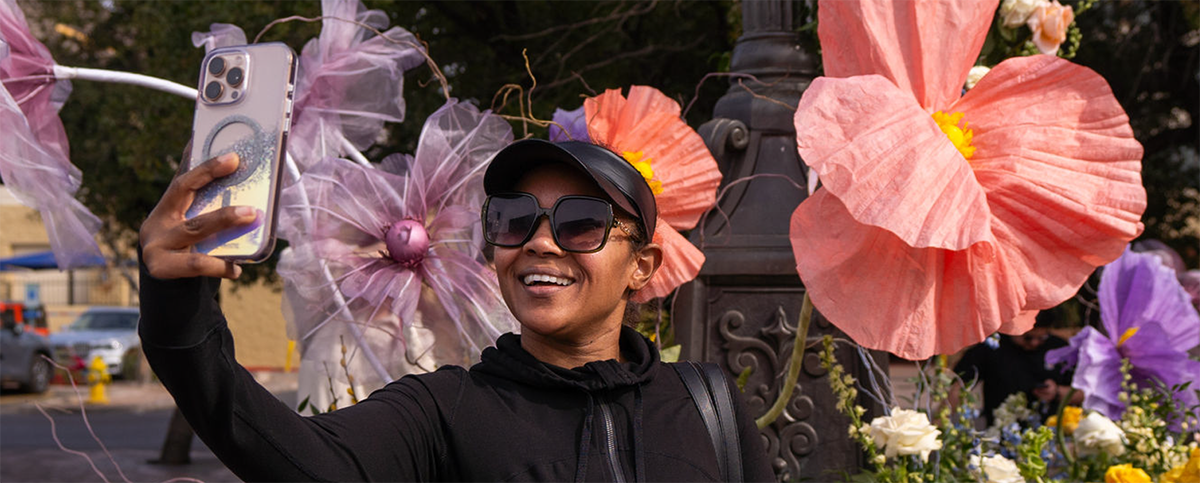
Taking a turn southeast to the Sonoran Desert, we’re taking a look at Tempe Blooms, a relative newcomer to the national event scene, that’s taking Arizona by storm (or by bloom, depending on who ya ask)! We’ve also played a part in Tempe Blooms, since its inception, and are admittedly big fans. Launched with a grant from the Arizona Office of Tourism three years ago, Tempe Blooms blossomed from the jump, and has grown into another great case story for the power of recurring signature events. Since year one, sponsors have been clamoring for the chance to participate, and the district found a winner with a signature sponsor in the form of the largest floral and flower wholesaler in AZ. The two-day weekend event takes place every January, and includes larger-than-life floral installations, a floral market, plant classes and of course roving musicians, street performers and that gorgeous AZ wintertime climate that sets the perfect landscape for live muraling, shopping, drinks, food and fun. The Downtown Tempe Authority works with local merchants in advance to develop flowerful specials in-store (like botanical beverages, floral cocktails, plant-based products and more). In a town of approximately 190K residents, as part of the broader Phoenix, AZ MSA of 5.2 million people, tiny Tempe really packs a punch. To date, Tempe Blooms has brought over 270K visitors downtown, and drove an astounding $8.1MM in impacts going back into their ratepayers’ pockets in just six days of activation. The event has earned an International Downtown Association “Award of Excellence”, and an IFEA “Pinnacle Award”, and gives one more reason for thousands to come experience this magical botanical spectacle firsthand, for themselves.
“Tempe Blooms has brought over 270K visitors downtown, and drove an astounding $8.1MM in impacts going back into their ratepayers’ pockets in just six days of activation. “
The moral of the story is this. Events, as a category of placemaking, should serve as more than just a reason to get outta the house. And to provide its impacts, proper planning, measuring and metrics must be in place. Surveying of attendees and participants is an absolute must. Not only for ideation and feedback loops — but also to understand spend patterns, party size, dwell time and motivational drivers. Everybody loves a big event, but the magic lies within the Marketing and Communication of the event, as well as the tracking of impacts and the ability to storytell your successes back out to the community, the city, the sponsors, the vendors and the public.
Each of our districts has the potential to leverage events as placemaking, while increasing awareness, visitation and brand authority — but consistency is key. We’ve seen too many districts bumble through a half-planned event, throw in the towel and say never again. But the reasons why it didn’t work, or has diminishing allure, effect and efficacy often indicate a lack of strategic planning and thought. If you need help putting your place on the map with a signature event that packs a KO, give us a shout!
Photo credit: Downtown Tempe Authority
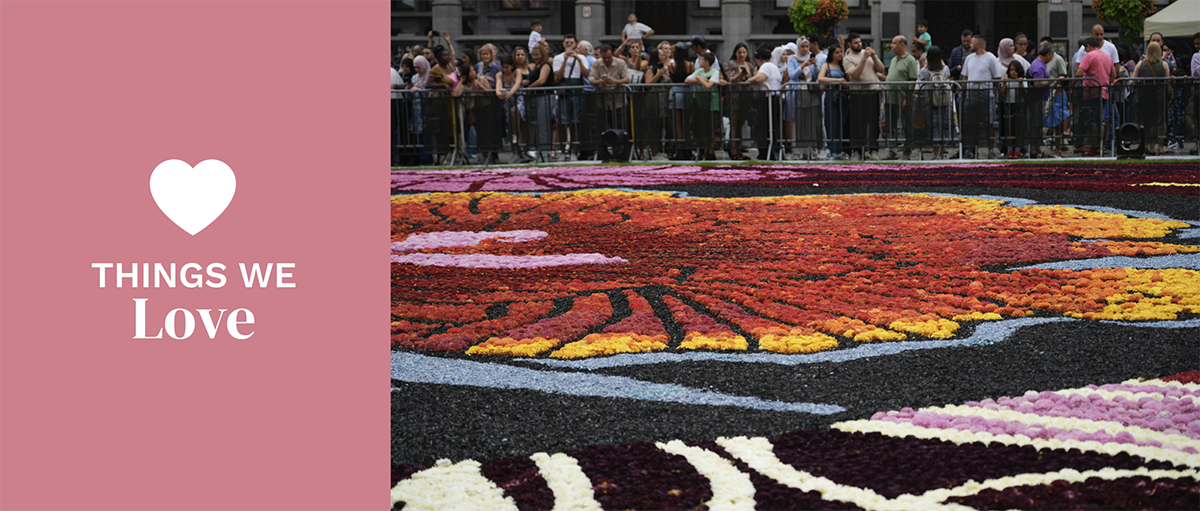
Speaking of public spectacles, in Northern Europe, you’ll find ephemeral artwork blooming on Belgian block cobblestones, but don’t blink, or it’ll be gone before ya know it. Twenty-four activations in, Brussels is celebrating its biannual Flower Carpet festival, and this year’s Sino-inspired masterpiece made a big splash on the Grand-Place. The ticketed event draws thousands of visitors each year, and dating back to the very first event held in 1971, the vividly florid event only takes place every two years. Each event has a different theme and featured artist, and hundreds of volunteers painstakingly positioned over 700K flowers to render the plaza into a massive floral carpet; 70 meters long and 24 meters wide, (roughly 230 feet long x 79 feet wide) and consists of dahlias, begonias, grass and bark. Visitors can walk around the carpet or view it from the balcony of the Town Hall. Brussels’ famous Flower Carpet was one of the points of inspiration we analyzed when developing Tempe Blooms, and its endurance, allure and appeal are testament to the placemaking power of flowers and recurring events.
Photos courtesy of Ieva Brinkmane on Unsplash
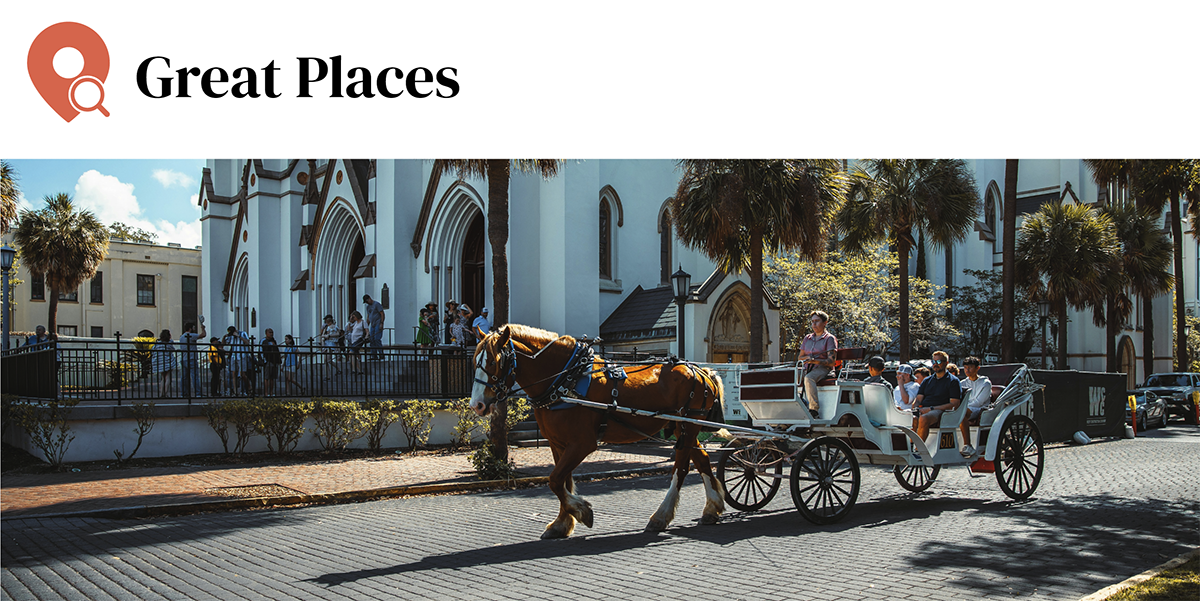
Small cities often get a bad rap or overlooked as too tiny to be considered economic powerhouses, however this piece from Resonance Consulting shows us that small can be mighty, especially from an economic development perspective. The 2026 America’s Best Cities report looked at nearly 400 places in the states today and ranked them all. But several standout themes bubbled up showing four different paths with one shared logic. Each of these cities identified something it could be genuinely best at, and organized its economic development, visitor strategy, and civic investment around that thing — rather than replicating what larger metros do at reduced scale. Check out the rankings and learn how Boulder, CO, Ann Arbor MI, Santa Fe, NM, Bozeman, MT, Savannah, GA, Myrtle Beach, NC, Sioux Falls, SD and Lincoln, NE are kicking actual ass with their economic development deep dives.
Photo credit: by Diane Picchiottino on Unsplash