

A timely trifecta of three titillating tidbits:
Pod Squad — Bloomberg Cities Network ponies up nine podcasts for city innovators, (but they missed our fave).
Social Glow Up — Those crafty social media experts over at Later put out a pretty solid piece on leveraging content pillars to pimp your socials in 2026.
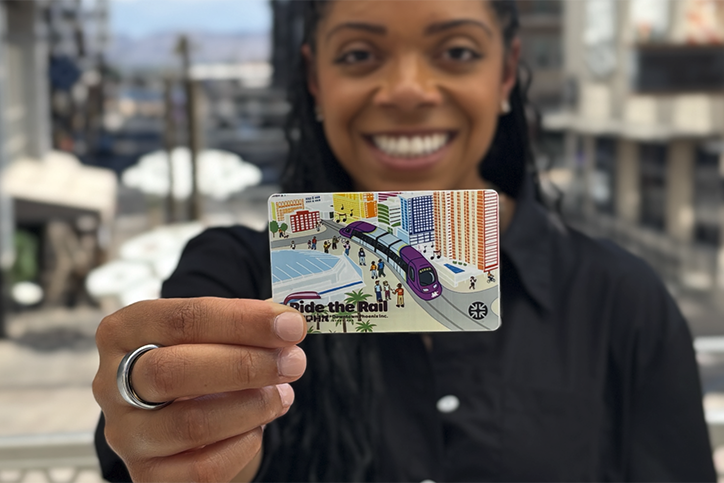
Hometown Hangs — Big props to Visit Phoenix on their clever social post plotting dining vibes on an x / y axis. File this one under “R&D” (rip-off and duplicate) — because imitation’s the highest form of flattery.
Photo credit: Matt Botsford on Unsplash
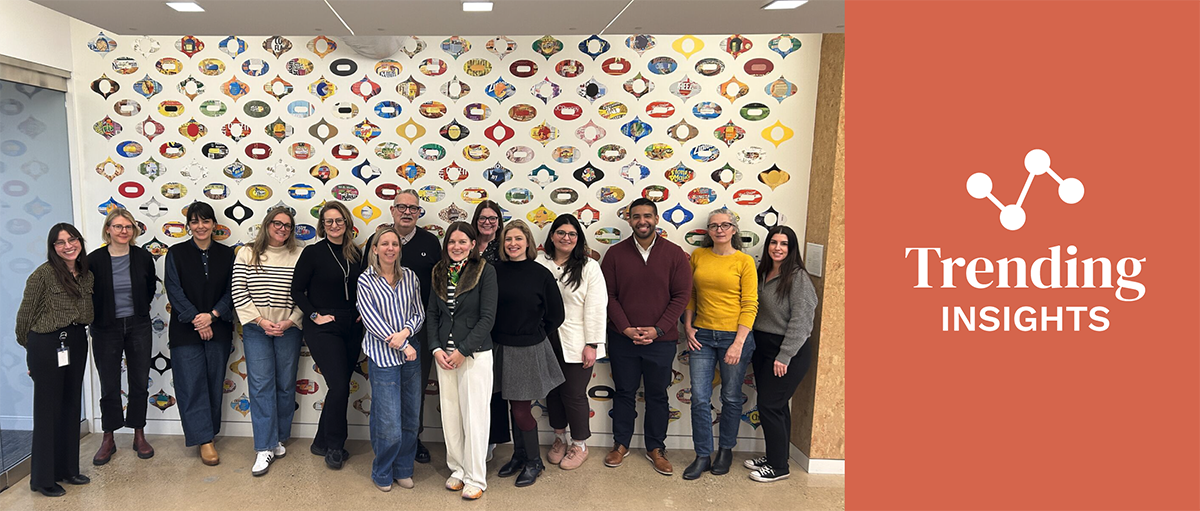
It’s so fun when BID-world collides with other aspects of your life, and we absolutely LOVED participating on this Technical Assistance Panel with the Urban Land Institute for the City of Philadelphia’s Department of Commerce. Our co-founder, Josh has been super involved with ULI PHL for years now, is the former co-chair of the TAP’s product commitee, and was an active volunteer panelist on this study. The exciting part of this TAP was the curation of a twelve-person team of subject matter experts, selected specifically for their expertise in solving the sponsor’s issues, questions and challenges.
This powerhouse panel convened — chockfull of UPMO might and experience. We were honored to collaborate with BID-world practitioners like Careyann Weinberg, Director of Economic Vitality for the Downtown Norfolk Council, who’s also managed the city’s award-winning Selden Market since 2017. We worked shoulder-to-shoulder with Kristine Kennedy, the current Executive Director of the Downtown Camden BID in New Jersey, whose illustrious career also includes management roles at Philadelphia’s Center City District and Northern Liberties BID. And we reconnected with an industry fave from Maryland who we hadn’t seen since the 2023 IDA conference in Chicago; Lauren Hamilton, who we worked with at the Downtown Partnership of Baltimore years ago. We were honored to meet and collab with Kurt Wheeler, Senior Program Manager from Project for Public Spaces, who oversees the Market Cities Program at PPS. The rest of the panelists were primarily local luminaries with explicit experience in markets, vending, incubators, accelerators and economic development at the municipal level.
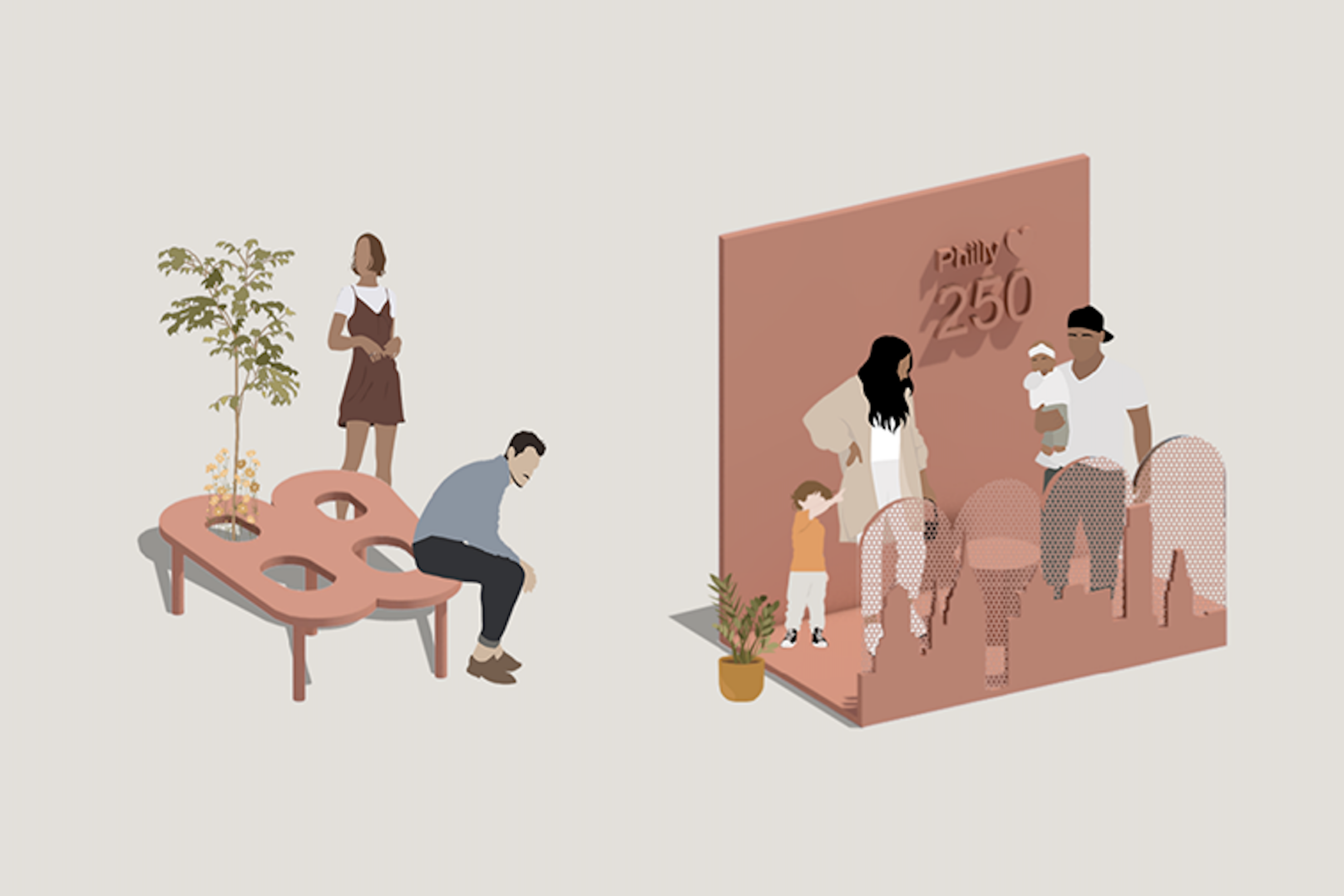
The deliverable itself is a valuable Toolbox for Markets and Vending. If your organization is considering developing or refining a market program, the ULI TAP report provides invaluable intelligence — at scale — for anyone evaluating light lift (pop-ups) through capital improvement projects (new construction builds) and everything in between. The Toolbox includes illuminating case stories, models and best practices from around the globe, as well as prototypes, feasibility and even financial modeling and cost considerations. Whether you’re planning a new market for activation, programming, incubation or community development — or need to evaluate and reposition an existing market — this ULI Toolbox for Markets and Vending is your go-to resource. Best of all — the intelligence and recommendations are absolutely FREE for you, thanks to our sponsor, the City of Philadelphia’s Department of Commerce.
Photo credit: by ULI PHL on Linkedin

… that state and local governments spend $50 billion annually on incentives, with roughly $47 billion directed toward tax breaks and cash subsidies primarily geared toward attracting and retaining big firms to their districts — despite the fact that the numbers completely ignore the local communities that have the potential to drive more localized resilience, sustainability and productive local economies? It’s pretty much a slap in the face to the locals who already live-work-play in your city.
American cities have spent decades chasing big fish, or “whales” as it were. Offer a giant company enough tax breaks, and it’ll set up shop and (hopefully) never leave. This “attraction-retention” model dominates economic development despite having a weak evidence base, and it’s basically urban renewal in a nicer suit — optimize hard enough for the biggest, shiniest employer and you crowd out everything else.
This article makes the case (channeling Jane Jacobs) that this obsession with “efficiency” quietly kills the messy, overlapping ecosystem of small and midsize businesses that actually generates new ideas and new industries. Jacobs’ favorite example: the Wright brothers were bike mechanics, not aerospace execs — innovation came from tinkering across sectors, not from monoculture. Now, with AI expected to require over a million occupational shifts in the New York region alone by 2030, cities that bet everything on attracting a few big employers may be left without a plan B.
The piece is bullish on New York’s new push toward “economic justice” under Mayor Mamdani, treating small business support as core infrastructure, not a side hustle. The takeaway: stop chasing whales, start cultivating reefs — diversity, not concentration, is what makes a city’s economy resilient.

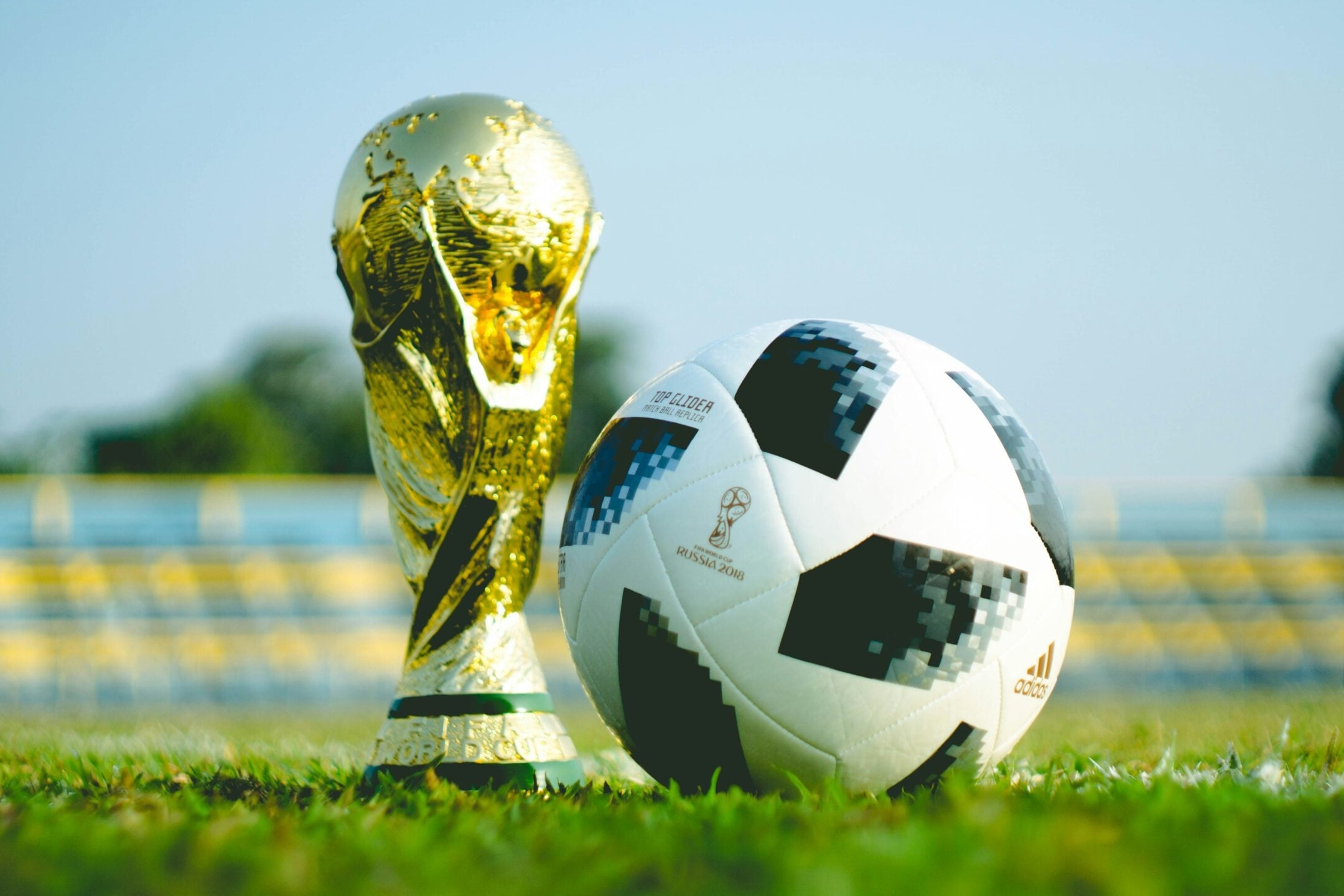
While we’re on the topic of what economic development gets wrong, this piece fits in nicely with some topical narrative. Our co-founder Josh recently posted an article he’d written on Linkedin about lessons learned and cultural value coming out of the 2026 World Cup games. The point being, every place has the opportunity to nurture community through common cultural practice. We don’t all have to be Norwegians rowing in tandem on an escalator. Convening our constituents to rally around a shared experience can be as easy enough as … group singing! And thanks to a comment from our partner and compatriot Liz Moselle from Places for People, we learned about Giant Sing Along, a company dedicated to collective experiences that drive community. These group singing events incorporate aspects of singing, dancing, nature, ritual, sensing, storytelling and most of all — PEOPLE! Whoda thunk!?! Cities such as Minneapolis and several in Australia have already hosted Giant SIng Along, and if you bring them to your town, please give us a shout. We’d love to learn more about how this amazing collaborative effort works in your hometown.
Photo by by Kyle Smith on Unsplash
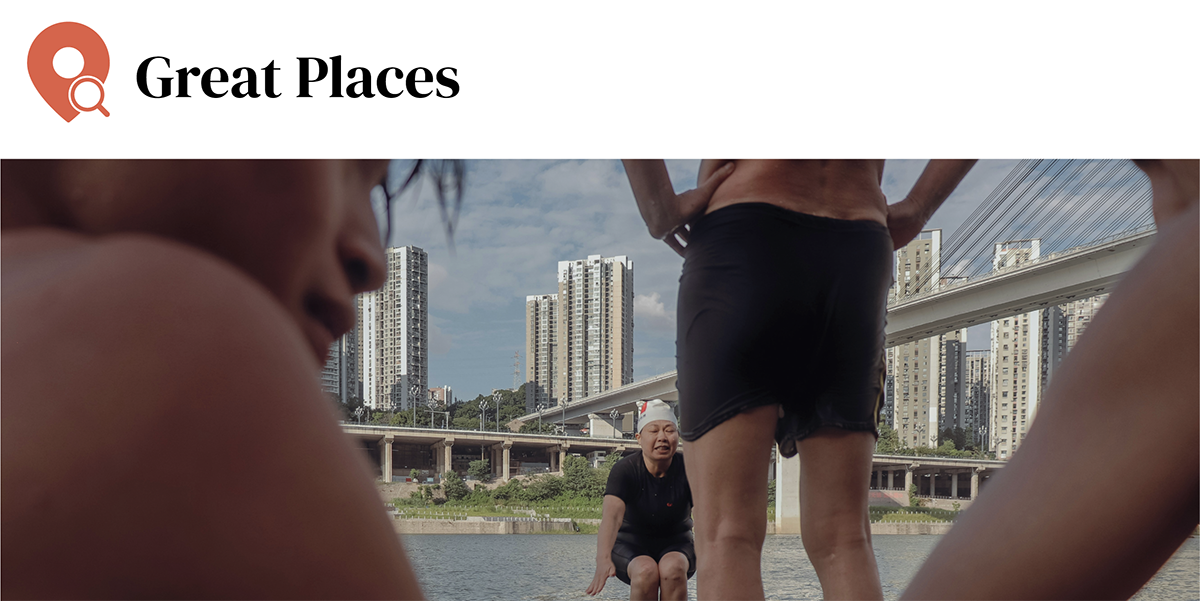
Big news, water babies! Apparently the rivers our grandparents were warned never to touch are now… fine? Great, even? From Paris to Copenhagen, Basel, Zurich, Bern and Oslo — Europe spent decades quietly fixing its plumbing, and now everyone’s cannonballing into water that used to double as an industrial dumping ground. Across the pond, Portland and Baltimore are riding the same wave, proving that the Clean Water Act eventually pays off. Who knew regulation actually worked?
The real obstacle now isn’t pollution, it’s vibes. People still assume their city’s water is toxic sludge, even once it’s not. Fair, considering everyone’s nana swore there were corpses in there. And in plenty of places, like Philadelphia, it is still not safe to swim in the city’s defining riverways — well, because of… you know. Code Brown!
So skip the $16 gym pool, dodge a heat dome, and reclaim your birthright to float past a cathedral like the Swiss do. Just make sure your local waterways won’t get you the added bonus of flesh eating bacteria or send you to the hospital with fecal infections. Gee-rosss!
Photo credit: by Yiquan Zhang on Unsplash
“I’m sure it’s safe but I’ve spent my whole life hearing that the water is dirty,” she explained. “Ça donne pas envie.”
— Parisian resident Soizic Prado, on swimming in the Seine.