

Read below for your twice-monthly dose of quick hits to titilate your placemaking brain:
- Jobs Report — whether you’re “networking for a friend” or looking to take the leap yourself, the industry is hiring. How about Marketing & Events Manager at Old City District in Philly, Content Strategist for Business Growth Storytelling at the Greater Cleveland Partnership in Ohio, or Director of Administration at Portland Downtown in beautiful, mystical Maine?
- Make Your Mark — with Earth Day behind us you can still make your mark on the planet — quite literally! Try this fun little Landsat time-waster from NASA with your friends, and just imagine the number of 5th graders typing more nefarious prompts like “8008135”.
- Now Hear This! — Audible opened the world’s first “bookless bookstore” in NYC. With the current trend in listening bars, vinyl bars, audio-focused lounges and tearooms and experiential pop-ups — tell your Eco Devo folks to snag one for your downtown next.
Photo credit: by NASA / Landsat

Whether or not you’re a fan of the pouty, cinematic soulfulness of Lana Del Rey, there’s no getting around the earworm that came along with writing this piece. Video games are big business, with an estimated 236 million in the U.S. playing regularly — that’s nearly 70% of the population! But shoot-em-up systems, fantastical farm economies and magical kingdoms don’t excite us. Naturally, what does grab our attention are video games for urban enthusiasts. And aside from SimCity, there are more than we ever even considered! Fortunately for us, Jake Pitre over at Planetizen has rounded up ten urbanist games to satisfy your immersive placemaking itch. From planning a Soviet Republic city to Surviving Mars to Roman townbuilding — the options for urbanist escapism abound.
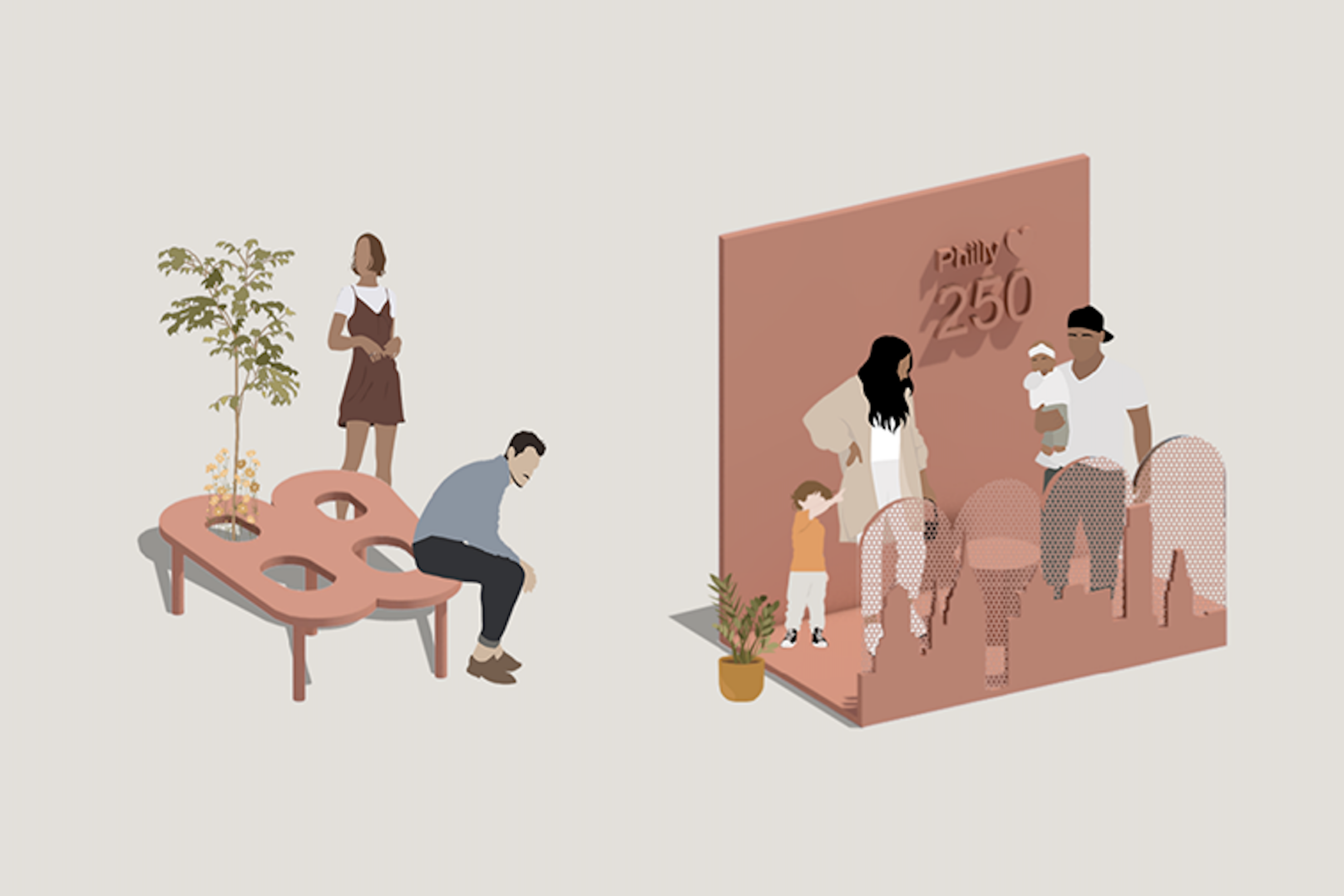
Looking to activate your urban ethos IRL? Check out this ingenious gamer-inspired placemaking event coinciding with Philly Tech Week and America 250. This year you have the chance to throw your name in the hat to play video games on the sides of a skyscraper flanking the Schuylkill River! Yes you read that right. The lottery to participate is now closed, but on May 8th some lucky urbanist gamers will have the opportunity to play the world’s largest video game on the side of the Cira Center in West Philadelphia; home to the region’s largest concentration of Eds & Meds, including Drexel University that also offers a game design course of study. The May 8th event is being tracked for the Guinness Book, but it’s not the first time Philly has offered up its infrastructure for public play. Back in 2021, Philly’s iconic skyline danced to the rhythm of someone else’s whimsy, when the One Liberty Place skyscraper showcased its new LED lighting scheme by allowing users to download an app and make the building boogie with the My Liberty Lights app. As our cities continue to evolve into 21st century gleaming beacons of what’s possible, these innovative placemaking blueprints make sense for every size of district, town or city looking to get creative with public participation and putting placemaking directly into the hands of its citizenry. When game design, urban design and placemaking collide, the results can be record-breaking!
Photo credit: by Mateo on Unsplash

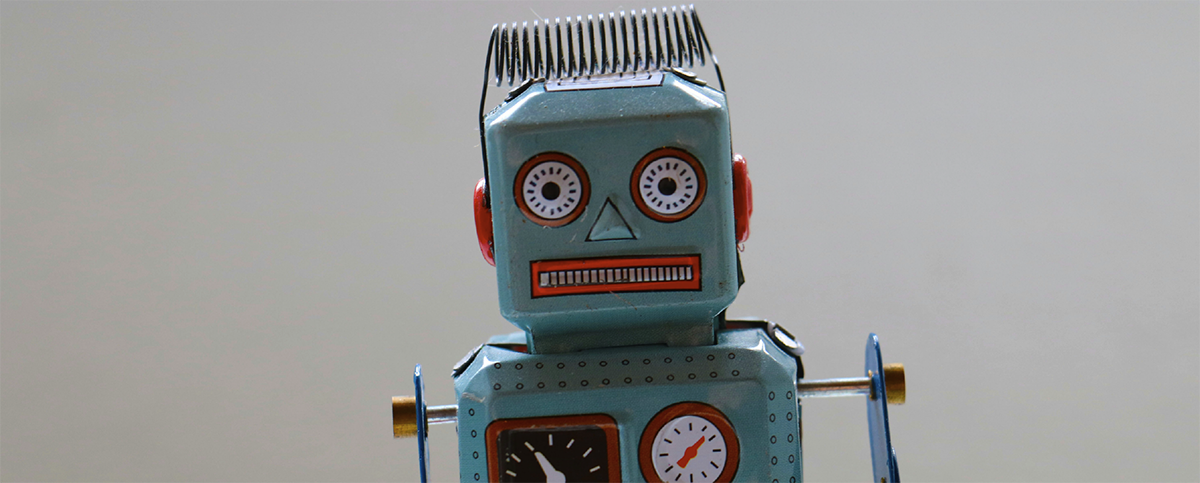
… that having an approachable, intentional, human tone of voice will win you more fans and followers than AI-generated slop? Of course you knew this already, but how frequently does a packed schedule, meetings that run over time and too much on your — plate equate to writing your district newsletter or corporate comms with AI? It’s an easy out, especially when you think no one will notice. However, Barron’s recently dug through corporate communications and found 73 documents using the same exact “not just X, it’s Y” sentence structure in a single quarter. That’s not a trend. That’s a massive “F” for everyone to see.
The culprit, obviously, is AI. When three-quarters of PR professionals are using AI-generated content — and nearly every company is routing its communications through the same handful of models — you get what this article calls “the Great Flattening” — every shareholder letter, press release and CEO LinkedIn post is slowly converging into one beige, frictionless, forgettable blob of corporate banality.
But here’s the twist! The author sees this less as a crisis and more as the biggest brand opportunity in years. When everyone sounds the same, sounding like yourself becomes a superpower.
The fix isn’t ditching AI. It’s having something real to say before you open the chat window; concrete specifics, earned opinions, and a voice that could survive having its logo removed and still be recognized. The companies that are winning use AI to amplify a point of view that already exists — not to generate one from scratch.
So. Does your destination actually sound like your destination? Or does it sound like the average of the internet? It’s worth asking before you drop that prompt, mijos.
Photo credit: by Emilipothèse on Unsplash
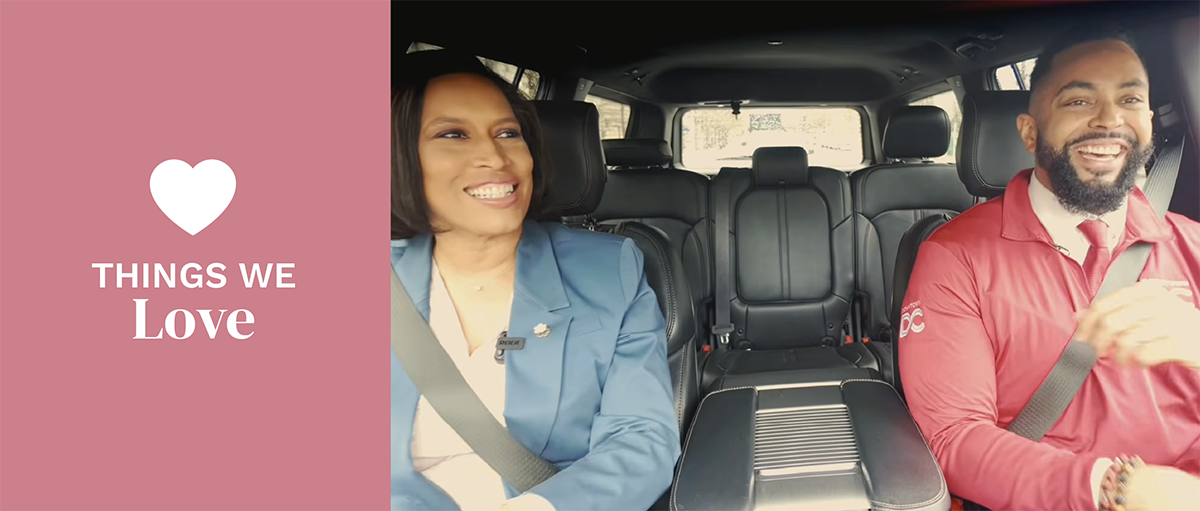
Speaking of Guinness World records, Downtown DC clinched its spot with last December’s “National Kiss Under the Mistletoe”, and they’re continuing to push the envelope with creative concepts galore. Most recently, we had to chuckle at the engaging way the Downtown DC BID is promoting their 2026 State of Downtown — by putting DC Mayor Muriel Bowser in a car with the BID’s CEO Gerren Price for a drive-around, sing-a-long they creatively call “Carpool Karaoke”. The synergy and rapport between DC’s top leaders is commendable, but taking them in as they sing along with karaoke fan faves such as Nirvana and Prince got our toes tapping and our faces grinning from ear-to-ear. Re: Gerren’s singing ability? Ya boy’s got pipes! Color us impressed.
Face it, every district engages in an internal contest to outdo previous SODs, but they can often end up as simply uninspired servings of lukewarm, rubber chicken, charts, graphs and lots of fundraising asks. Big props to Downtown DC for consistently pushing the creative envelope, and adding an unexpected punch of spice and flavor to this year’s event that represents “DC” better than Mambo Sauce ever could.
Photo by Downtown DC BID on YouTube
Underneath one of America’s greatest examples of urban revitalization, quietly sit over four million books and artifacts, in a climate controlled literary vault complete with a “book train” that carries requested research items from underground to library staff throughout the building, all the way up to the Rose Main Reading Room on the top floor of the New York Public Library’s main branch in Midtown. The book bunker is called the Millstein Research Stacks and has a fascinating history on its own.
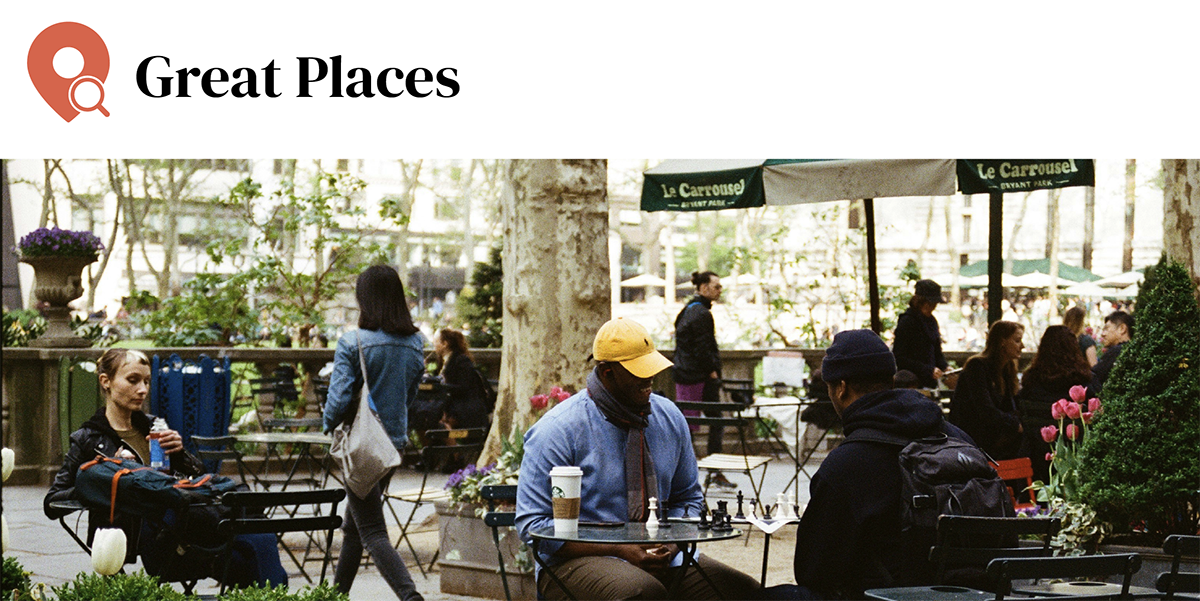
But yes kids, were talking about NYC’s famous Bryant Park — that spurred the Virtuous Cycle, and radically changed the trajectory of one of today’s world-class cities and global destinations. Lauded by urban planners, placemakers and community advocates everywhere, we hold up Bryant Park not just for its modern day success as a cultural anchor asset in the city — but also for its long and illustrious history. The parcel that currently hosts Bryant Park has been many things to New Yorkers over the past four centuries including a potters field, a municipal reservoir-cum-pedestrian-promenade, as well as a public gathering space.
Back in the 1970s and ’80s, this part of town t’warnt so pretty! Bryant Park was colloquially called “Needle Park” — this is the same era when NYC had a self-appointed citizen militia manning the subways. Crime was up. Investment was down. And the Big Apple was literally rotting from the core outward. Even the infamous William Holly Whyte studied the storied park, and his assessment was that drug dealers weren’t the issue. Underuse was.
After decades of reversing fortunes, much of the radial investment stimulated by a revitalized Bryant Park, today the park is one of the most used urban greenspaces globally. With with over 12 million annual visitors (with upwards of 25k per month in warmer months), today Bryant Park is frequently cited as one of the most successful case studies in urban revitalization. Does your downtown or district have an “annoying asset” or underdeveloped location just begging to be loved again by the community? If so, give us a shout to see how Bright Brothers Strategy Group can bring world-class placemaking chops to the table and incite the Virtuous Cycle in your hometown.
Photo credit: by Dominik Pearce on Unsplash
“Sounding different becomes the rarest competitive advantage a company can have. The company with real personality, earned conviction, and concrete specificity stands out like a bonfire in a field of flashlights.” — State of Brand