

Whether you’re a major global tourist destination or the steward of a remote rural downtown that rarely sees international visitors, the fact remains that we’re all feeling the effects of our government’s inward retreat. The U.S. is clearly giving off isolationist vibes on myriad fronts that have virtually zapped international tourism and direct investment in your city, and the numbers are staggering. From Florida’s terrible, horrible, no good, very bad tourism slump leaving the Sunshine State looking like a ghost town, to warning signs of a glitz- and glamor-less Las Vegas dip in travel numbers, the loss in overall tourism dollars so far this year is adding up to an insurmountable $12.5B hit, according to the World Travel and Tourism Council.
The signs are here, and the knock-on effects are calculable. Not only are international travelers pulling back on trips to the U.S., but domestic uncertainty and recessionary fears are keeping pocketbooks and wallets closed, as anxious capitalists are pulling back on spending. Alas, the breakfast category may be the proverbial canary in the coalmine that’s kicked the bucket along with sales of value-priced fast food. In response, many food and drink purveyors are getting crafty and creative with “recession specials” as desperate attempts to lure back incremental revenue from cost-conscious segments.
In addition to challenging, offending, and driving away international tourists, a proposed additional $250 visa integrity fee may be another proverbial nail in the coffin, deterring international travel at a fairly precarious time in history. From an international tourist’s perspective, we’ve made it clear we don’t want you here, and now we’re gonna charge even more for those willing to look past our offensive positions on outsiders, immigrants, and tourists with an entire outside world of options as their oysters. Why come stateside?
The pain and ensuing repercussions on the global stage may be felt most acutely next year, when the U.S. is poised to celebrate (perhaps only amongst ourselves) the 250th anniversary of our sacred experiment, alongside what could have been a possible windfall in tourism dollars from sports fans. With the U.S preparing to host the 2026 FIFA games in a litany of luminary cities across the states, the potential for disaster is potent and palatable.
So what does all this mean for you and your district? We called this shot a few months back and offered a template to reorient your approach to driving footfall domestically. This still holds water. We’d also like to acknowledge our clients who have developed rigorous rapports with their local CVB. We highly encourage you to meet with yours regularly to discuss proven strategies and tactics for collaboration, such as:
-
Sharing of data, trends, and actual footfall. Identify markets where your tourism bureau is seeing statistical returns on its efforts
-
Maximizing your limited ad spends to target the same feeder markets your CVB does to increase regionally-based brand exposure, and extend campaign budgets by piggybacking off the same consumer bases
-
Discuss the hand-off between the DMO’s efforts to lure travelers to you, and where you should be publishing targeted content locally, like itineraries by targeted Persona for one, two, and three-day stays that funnel travelers to your ratepayers
-
Consider joining forces with your CVB and neighboring place-based orgs to fund and launch joint tourism initiatives. Even if you can’t contribute financially, you can do your own constituents a favor, by acting as a convener regionally, producing stellar destination-oriented content, or even coordinating prizes and giveaways for the ultimate regional experience — a proven collab strategy.
-
Lean into local placemaking and deploy proven ways to reimagine your civic commons
Looking for more ideas or strategies to compensate for a drop in Canadian, Chinese, or Latin American tourism dollars for your district? Give us a shout and let’s discuss how we can lessen the blow and fill the historic hole left by our federal government’s most unwelcoming positions on the global stage.
Photo credit: By Raul_Mellado
We love a good clapback — like, who doesn’t? So if you’re exhausted from constantly defending Complete Streets and cycling infrastructure in your socials, check out this comprehensive round-up of “Comeback Guide to all the Anti-Cycling Arguments You’ll Hear This Year” that will leave your readers exclaiming, “Oooh, sick burn!? And what more could you ask for?
Photo credit: By nunezimage


… that Japan is using drones for a very practical and pragmatic need? While we’ve looked at drone shows as a viable replacement for smoky, pet-traumatizing, digit-destroying fireworks displays, those crafty-yet-coy Pacific Islanders have developed new ways to deploy drones at concerts and public events, that require the fast, functional, and frictionless movement of people after the big show. Yep, they’re using drones to facilitate human traffic, and it’s proving an affordable and efficient exit strategy, of sorts!
Photo credit: By Hanvin Cheong


Hitting your email growth metrics can be challenging. And for all the effort your org puts into social media marketing with its questionable returns, many districts missed the memo that email marketing (aka your district newsletter) is consistently the top-rated performance marketing channel overall (and yes, for every industry)! So consider shifting some of your fervent MarCom investment over to growing your e-blast KPIs, and you’ll be glad ya did. Not sure where to begin? Read these 52 recos (yep, one for each week of the year) to start marketing your district like the pro we know you are!
Photo credit: By YuriArcursPeopleimages
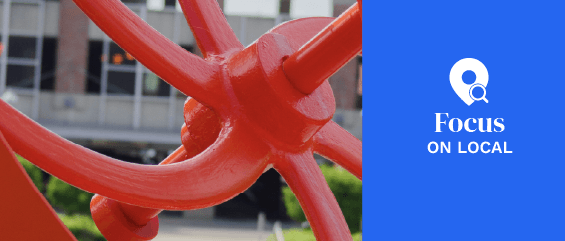
The little city that could, Akron, OH, is pulling itself up by the bootstraps, but it’s not alone. As the hub in a spoked network of cities and towns along a 100-mile former canal, Akron is deploying a multi-pronged strategy to improve its public realm; providing spaces and places that connect locals to regionals — and to other cities such as Cleveland, Ohio City, and beyond. The connective tissue that binds Akron locally is an emphasis on self-improvement through parks and public spaces, as a Civic Commons-participating town with a playbook for community.
Photo credit: By Michael Ameteku
“To see the traffic drop off so significantly, especially because of rhetoric that can be changed, is so disheartening,” — Patrick Kaler, CEO Visit Buffalo Niagara