
If you’re a fan of Star Trek “Discovery”, you may be familiar with Mr. Saru, a Kelpian from Kaminar who can sense death when it’s near. We’ve been having similar hair-raising (or ganglia-raising, as it were) sentiments lately as well, from an unlikely source — the internet.Yes, that digital lifeforce that binds all sentients on the planet may be giving off canary-in-the-coalmine vibes these days and it’s not just you. With a profusion of bots, spam and scam texts, it feels like with each passing week, we’re being crowded out and hounded by non-existent entities. Thats because the once revolutionary power of the internet and digital connectivity that previously brought our world closer, has now come full-circle. We’re living in a dystopian nightmare that may or may not eat its own head like a proverbial Ouroboros.
Ok, sci-fi and cautionary prognostication aside — we may actually be witnessing the death of the internet. Not through legislative measures (although that’s looming), or even the essential cables that connect us being cut. Thanks to generative AI and the ever-nearing Singularity, we could be watching the proverbial nails in the coffin, as the internet as we know it is consumed, usurped and is flat out shitified by the intelligent apps, bots and digital companions we created to help us.
TIME recently published a primer on the “Dead Internet Theory” and why it’s growing. It’s an insightful look at the hows and whys of what we’re currently experiencing. That article explores how the revenue-generating aspects of content creation online have lead us to this paradoxical precipice, and that as of last year, a plurality of internet traffic (well, 51% counts as a majority, right), is non-human! ¡¿Astounding, que no?! And we really loved this quote, “It is in the business interest of platforms to cram slop down our throats, because over time, if there’s more AI accounts, they have to pay human creators less,” says Adam Aleksic, a linguist and author of Algospeak: How Social Media is Transforming the Future of Language.
Popular Mechanics recently posited that we have about three years before the internet is upside down with digital slime. That article notes that the Pew Research Center estimates that 38 percent of (mostly) human-made webpages from 2013 no longer exist due to “link rot” indicating that the internet is no longer made by and for humans; rather our insipid AI companions.
So what does all of this mean for us as content creators and marketers? While we all bone up on our shit-sniffing skills to suss out fake content, it’s going to become even harder to break through the noise of limitless insincere content online — we must continue to focus on humanity. Human connections — from IRL to URL — we implore you to engage with your local communities. Meet the people you serve. Tap into their stories of humanity, locality and authenticity. Feature them in your newsletters, website content, blogs and socials. Shake hands, kiss babies and build your followings in the non-digital world, and openly display your commitments to them. While we all have a shockingly large amount of bot traffic and Finstas following us online — if we re-lens the focus on the good we do for our communities, and supporting the humans we love, we can make a difference in a world increasingly crudded up by AI junk. And that’s a missive we can all get behind now, not in three years from now.
Photo credit: by David Pupăză on Unsplash
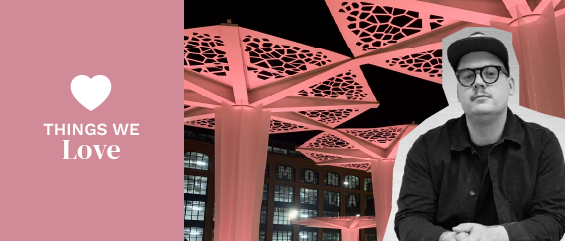
We ❤️ good placemaking! And whether you’re talking about quick and dirty tactical urbanism, long-term capital investment or someplace in between — we’ve got fresh, new, innovative talent for you! We’ve been following along as founder Brian Baksa launched Praxis Placemaking Studio. Baksa is a placemaker, educator, and multi-disciplinary designer with deep acumen and experience in commercial hospitality, non-profit/community organizations, public space activations, and both single-and multi-family residential. We’ve seen his work firsthand, and are so impressed. We recently sat down with Brian to better understand what makes Praxis tick, what they’re good at, and how a multidisciplinary approach can amp your placemaking far beyond a single practitioner.
So what is Praxis? Brian told us that Praxis Placemaking Studio is a collaborative design practice that convenes owners, designers, and fabricators, resulting in inspired experiences. Born out of a love for the spaces and places in-between, we work at the confluence of place activation, identity, and spatial design – transforming small moments into big experiences.
Whether you’re looking to implement a temporary installation, event activation, or permanent placemaking kit-of-parts, Praxis works closely with you to ideate, design, and give you the tools for a successful realization of your project.
How did you get into this field? Baksa professed that stemming from an architectural background with an affinity for visual identity, branding, and public space activation, Praxis is truly a multi-faceted and multi-disciplinary studio with a set of flexible and creative skills. We understand space – and how best your spatial design communicates with your visual identity and branding for a holistic approach. When you work with us, you benefit from our small-scale, nimble office – you’re working one-on-one with our team, regardless of the size and complexity of your project.
Do you work directly with place management districts, or just developers? In the last 6+ years of working as a Design Lead for an architectural firm, and prior to launching Praxis, I have had the opportunity to lead truly impactful projects in Baltimore. Elijah’s Park, in particular, was a project that closely coordinated with the Baltimore Peninsula Partnership, Baltimore City Recreation & Parks (BCRP), and various stakeholders. We designed a pavilion building surrounded by large-scale, tree-like, steel canopy structures.
Lastly, we asked Brian about his company ethos, and his response was that, although Praxis is placemaking and visual identity focused, our north star stems from years of practicing architecture and understanding the spatial implications of design. I look at projects not only for design solutions, but I also think through the social and experiential impact of each intervention as well. It all comes back to people.
With a small sample of the possibilities, we’re already hooked. For more info and insights, please check out the Praxis website and blog, and sign up for their newsletter!
Photo credit: by Josh Yeager

… that an estimated 1 in 6 people experience sensory-processing differences, though some experts believe the number may be closer to 1 in 3. These differences affect how individuals perceive light, sound, texture, and movement — and they can impact anyone, regardless of diagnosis. As Brian Baksa just mentioned in the previous section, inclusive design could be the answer. Bright Brothers presented on inclusive design and neurodivergency at IDA 69 in Chicago, and we literally had a woman come up to us in tears, after the session, admitting that this was the first time she had ever heard someone speak publicly about the way she experiences the world. It was an impactful moment that squarely spoke to the need for inclusive design in our planning and programming of community events and activations within our districts.
One of the most amazing district projects we’ve come across this year comes out of Coliseum Central in Virginia’s Hampton Roads region. There, the BID purchased and repurposed a Sensory Activation Vehicle that rolls up to all of their events, offering respite from sensory overload, and exactly the same kind of balancing and grounding we saw with the Minnesota State Fair. The coolest aspect of Coliseum Central’s SAV is that it’s not just for BID-programmed events. The community can rent the SAV for as little as $400 per day for their own events— or less (if you’re within the BID boundaries) and we wish that EVERY district in IDA’s membership would be able to offer something similar for their communities. From state fairs and weekend activations, to larger scale inclusive design of parks, public realm and civic infrastructure show that with a few tweaks, accommodations and considerations, we can truly offer outstanding experiences for all the people in our communities today. Well done, Coliseum Central!
Photo credit: by mauro mora on Unsplash

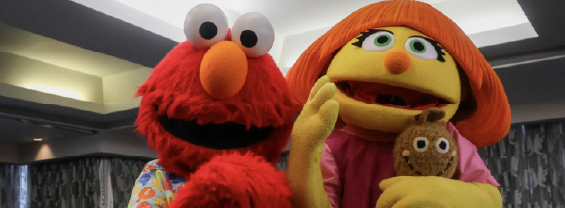
Next week, when we’re all in DC for IDA 71, we implore you to ask your colleagues and peers how they got into the UPMO industry. Dimes to donuts, very few of us actually intended for this to be our career path, and yet, we now find ourselves in one of the most inclusive, socially positive, and productive industries around. Collectively, we can all be proud of the work we do. And collectively, many of us grew up watching Sesame Street, which may have very well planted the seeds for our worldviews around place, community, and social interactions. Enter another classically revered piece of media — Jane Jacobs’ “The Death and Life of Great American Cities”. This seminal read has certainly impacted our approach, and some of the mainstay tenets of Jacob’s pioneering research include philosophies and modalities we continue to imbue in our communities today, such as the Sidewalk Ballet, Eyes on the Street, mixed-use neighborhoods, 3rd places and more. That’s probably why we’ve watched this nostalgic, sentimental and incredibly inspiring “Sesame Street x Jane Jacobs” NYT videoabout a thousand times now. Enjoy and share it with a friend or colleague. Pass it on!
Photo credit: by Meg von Haartman on Unsplash
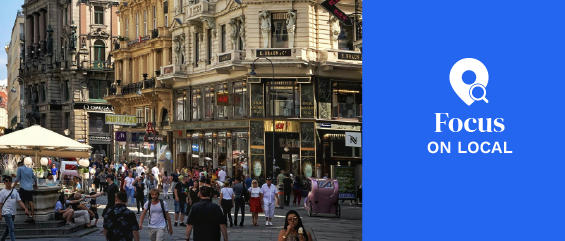
Vienna’s got 99 problems but a park ain’t one — thanks to 5K Euro stipends for community placemaking. Vienna’s basically paying people €5,000 to build their own local mini-parks, and honestly? We’re here for this sendy good energy.
Since 2015, over 100 “Grätzloasen” have sprouted across the city like urban mushrooms after rain. Yep, that’s what they call them, and for German speakers, the word is titillating. “Grätzl” means an area, or a neighborhood (like a “Kiez” in Berlin or a “barrio” in Madrid or a “quarter” — like NOLA’s “French Quarter”) + the plural for the word “oasis”. Put them together and you’ve got your five-syllable Grätzloasen!
Vienna usually tops those “most livable city” lists, but apparently some neighborhoods were giving off serious concrete jungle vibes. The solution? Give money to residents and let them go wild with local pocket parks.
And while Americans would lose their minds over losing parking (case in point), Austrians tend to have more communal priorities. Leave it to the Viennese to come up with something more spectacular than Viennoiserie!
Photo credit: by Victor Malyushev on Unsplash
“Nowadays, architecture is no longer architecture. In a world where the service of architecture for the sake of development has prompted pitfalls and displacement, it’s more important than ever to design with a multidisciplinary approach. For me, placemaking encapsulates that worldview and unites designers and stakeholders from all backgrounds for truly successful projects.” — Brian Baksa, founder, Praxis Placemaking Studio