
A Word from Us…
All across America, we work with districts and downtowns, tourism and CVBs and a smattering of cities directly. We have our fingers on the pulse of the nation from Downtown San Francisco to Lower Manhattan and everywhere in between. Our small-but-mighty consultancy offers unparalleled insights into trends, technologies and market pressures affecting place-based organizations everywhere. We diligently research the world on the daily, to collate, curate and produce one of the most revered industry publications for place-based organizations with our Bright Brothers Bulletin. Plain and simple, we know place.
There is a massive seachange afoot, and for months now, we have been advising our clients to pivot. Rosy predictions, narrow-sighted plans and wishful thinking is driving much of the media coverage and planning around seminal, once-in-a-lifetime events that are due to play out on the world stage, here in America this summer. Not to be alarmist, but the realities and actualities of all this coveted tourism footfall and consumer spending may very well not materialize. But there are bigger forces at play, and stifled international tourism, amplified by weak domestic consumer sentiment and even-tighter purse strings amount to some serious considerations for your organization. We’re not just talking about FIFA or America 250 celebrations. As the geopolitical landscape radially upends static norms — your organization will have to fight to stay afloat. The warning signs are all present, and our aim in publishing this report is to arm you with facts, explain the meaning of the turmoil, and translate news accounts, articles and prognostications into actionable, tangible strategic pivots you need to make — like yesterday! We invite you to read on to understand the playing field, the pressure and how to translate these forces into upsides for your org, your ratepayers, members and stakeholders, and the communities you endeavour to support. If you need help along the way, please give us a shout. We’re here to help!
Introduction
The Playing Field
America has a habit of throwing enormous parties and then being surprised when some guests decide not to show up. This summer, the country is hosting, in no particular order of hubris: the FIFA World Cup, the nation’s 250th birthday celebration, and the accumulated cultural karma of roughly eighteen months of geopolitical self-sabotage. Two of those things were planned years in advance. The third just sort of happened. And right now, all signs point to the third one doing the most to shape what the summer actually looks like.
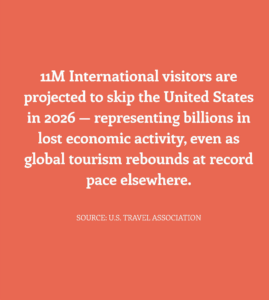
“11 million international visitors are projected to skip the United States in 2026 — representing billions in lost economic activity, even as global tourism rebounds at record pace elsewhere.”
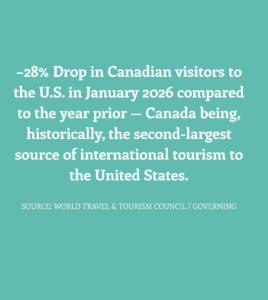
Let’s set the table. The United States Travel Association has estimated that approximately 11 million international visitors who would otherwise be heading to America this year have quietly decided not to bother. Foreign visitor arrivals dropped 6 percent last year even as global tourism rebounded everywhere else on the planet. January 2026 brought a 4.8 percent decline in inbound travel versus the prior year — including a staggering 28 percent drop in Canadian visitors, a group of people who, until recently, we could count on to show up reliably for Niagara Falls and Buffalo Wild Wings. Canada! The country directly above us, connected by one of the world’s longest undefended borders, is apparently now thinking twice. That ought to be a wake-up call. It sounds more like a foghorn.
 Into this environment, cities from Philadelphia to New York/New Jersey have made enormous financial bets on tourism delivering a summer for the record books. Philadelphia alone is spending $620 million on Semiquincentennial festivities. New Jersey had earmarked $5 million just for a week-long World Cup fan festival — a plan the state’s Democratic governor has since quietly scrapped. A German Bundesliga club, Werder Bremen, canceled a planned pre-season trip to Minneapolis after becoming understandably nervous about what might happen to their players at customs. And Las Vegas, America’s most reliable barometer of discretionary spending, is reporting sharp visitor drops as leisure budgets tighten. This is, to use the technical economic term, a lot of bad omens stacking up at once.
The question isn’t whether this summer will be complicated. It will be. The more interesting question is how complicated, for whom, and whether the cities and organizations in the blast radius have calibrated their expectations to something resembling reality, or whether they are still operating on the assumption that “build it and they will come” is a functional tourism strategy. When the welcome mat has been replaced with a questionnaire about your social media history, and paying a hefty fee to do so — it adds insult to injury.
TAKEAWAY NO. 1
The International Tourism Gap Is Real, and Wishful Thinking Won’t Fill It
Here is something that does not appear to have fully penetrated the planning documents of various host cities: the people who were supposed to fill your hotels, buy your overpriced jerseys, and eat at your restaurants are making different choices. Policy is now, openly and measurably, driving destination decisions. According to research from travel consultancy Future Partners, 57.5 percent of travelers from non-Visa Waiver countries say a new $250 visa integrity fee reduces their willingness to visit. Over 43 percent of international travelers say new National Park fees for foreign visitors diminished their interest. More than a third flagged social media screening requirements as a deterrent. These aren’t abstract concerns — they represent real friction layered onto a travel experience that was already complicated and expensive.
“Don’t go to the US — not with Trump in charge”
And then there are the real life receipts. A British tourist with a valid visa was detained by ICE for six weeks. That story traveled. Stories like that always do, and they have an effect on international travel perception that no amount of destination marketing budget can easily counteract. “Don’t go to the US — not with Trump in charge,” isn’t just a protest slogan; increasingly, it’s a genuine conversation happening in travel forums, with tour operators, and at kitchen tables in countries that used to send us plenty of visitors without a second thought.
The World Cup was supposed to be a guaranteed tourism boon. And to be fair, the tournament itself will draw crowds — soccer fans are committed in a way that borders on the irrational, and many will come regardless of geopolitics. But “many will come regardless” is not the same as the surge that was being modeled. The gap between the projected crowds and the realistic crowds is where city budgets go to die, slowly and with a lot of optimistic press releases along the way.
TAKEWAWAY NO. 2
Domestic Tourism Isn’t Riding to the Rescue Either
The conventional fallback position, when international tourists underperform, is to point toward domestic travelers. Americans will pick up the slack. Americans love a party, love a spectacle, love an excuse to spend money on commemorative merchandise. Except — about that. By a growing number of accounts, America is hitting a financial wall when it comes to travel. Airfare is expensive. Hotels are expensive. Food is expensive. The general cost of attending any major event has gone so thoroughly off the rails that “leisure spending” is increasingly a descriptor for something only certain Americans can actually afford to do.
Las Vegas’s visitor drop is instructive here. Las Vegas is not a subtle city. It does not deal in nuance. When people stop going to Las Vegas for fun, they are not making a sophisticated philosophical choice — they are saying, plainly, that they do not have the money or the willingness to spend it on what Vegas is selling. That signal deserves to be taken seriously by anyone who is banking on domestic tourism to fill a summer calendar.
“Rosy is an understatement”
There is also a crowd-aversion dynamic that economists have documented in Olympic and mega-event host cities: regular visitors stay away. The people who might otherwise visit Philadelphia for a long weekend in June look at the schedule of events, the projected crowds, the traffic disruptions, and the commemorative $28 cocktails, and decide to go somewhere quieter. This doesn’t mean nobody comes. It means the composition of who comes shifts, and the net economic effect is frequently less impressive than the gross projection suggests. Temple University’s Michael Leeds put it plainly when assessing Philadelphia’s $620 million bet: “Rosy is an understatement.” When an economist says that about an economic impact projection, you should probably believe them.
TAKEAWAY NO. 3
The Brand Damage is the Part that Lingers
Tourism numbers in any given summer are one thing. What’s harder to fix — and what deserves more attention than it’s currently getting — is the erosion of the United States as a desirable destination brand. Brands take years to build and can be damaged with surprising speed, especially in an era where travel decisions are heavily influenced by peer networks, social media, and the kind of word-of-mouth that spreads faster than any marketing campaign can respond to.
Culture tourists — the segment of international travelers who come specifically for arts, history, architecture, and experiences — are proving particularly sensitive to what one specialist called the “style of leadership” and “unpredictability” of the current moment. These are high-value travelers: they stay longer, spend more, and are the kind of visitors that cities genuinely want. And they are, increasingly, taking what the industry is delicately calling “moral positions” about where they go and how they spend their money. America has historically been a premium destination for this segment. Right now, competing destinations — many of which have noticed the gap and are actively marketing into it — are picking up the business.
“The concern isn’t just 2026. It’s 2027, 2028, 2029.”
The concern isn’t just 2026. It’s 2027, 2028, 2029. Tourism markets have memory. The associations people form about a destination — safe or unsafe, welcoming or hostile, exciting or fraught — tend to be sticky. Rebuilding a reputation as a welcoming destination after it has been dinged takes time, resources, and a sustained change in the underlying conditions that created the perception in the first place. None of those things happen quickly, and none of them happen through marketing alone.
So yes, the World Cup will be played. The Semiquincentennial will be celebrated. Some visitors, domestic and international, will come and have a wonderful time, and some of them will generate genuinely positive economic impact for the host cities. None of that is in dispute. What is in dispute is whether the numbers will look anything like what was projected, whether the public and private investments being made will generate the returns that were promised, and whether the people making those promises have done a serious accounting of the headwinds or have simply decided that optimism is more fundable than accuracy.
America is, as it has always been, a country capable of extraordinary things. It is also, at the moment, a country that has made itself harder to visit, more expensive to reach, and — for a not-insignificant portion of the world’s traveling population — a place that comes with questions they’d rather not have to answer at the border. The summer will happen. The question is just whether we’re ready for the version of it that’s actually coming, rather than the one in the brochure.
Turning indicators into actionable strategy…
So what does all of this mean if you’re a municipality, a UPMO (BID) or a CVB/DMMO?
STRATEGIC PIVOT NO. 1
It’s Time to Clean House
Don’t try to be a Las Vegas, Palm Springs or New York. Spending big on international advertising campaigns probably isn’t in the mix for your locale. And wasting your taxpayers’ dollars trying to reverse the common global narrative isn’t going to countermand the collateral damage our government has imposed; driving international tourism down across the board. As mentioned above, brand reputation takes years to build and thousands of net positive experiences to turn the tide.
“The foreseeable future is vastly less reliant on international tourism.”
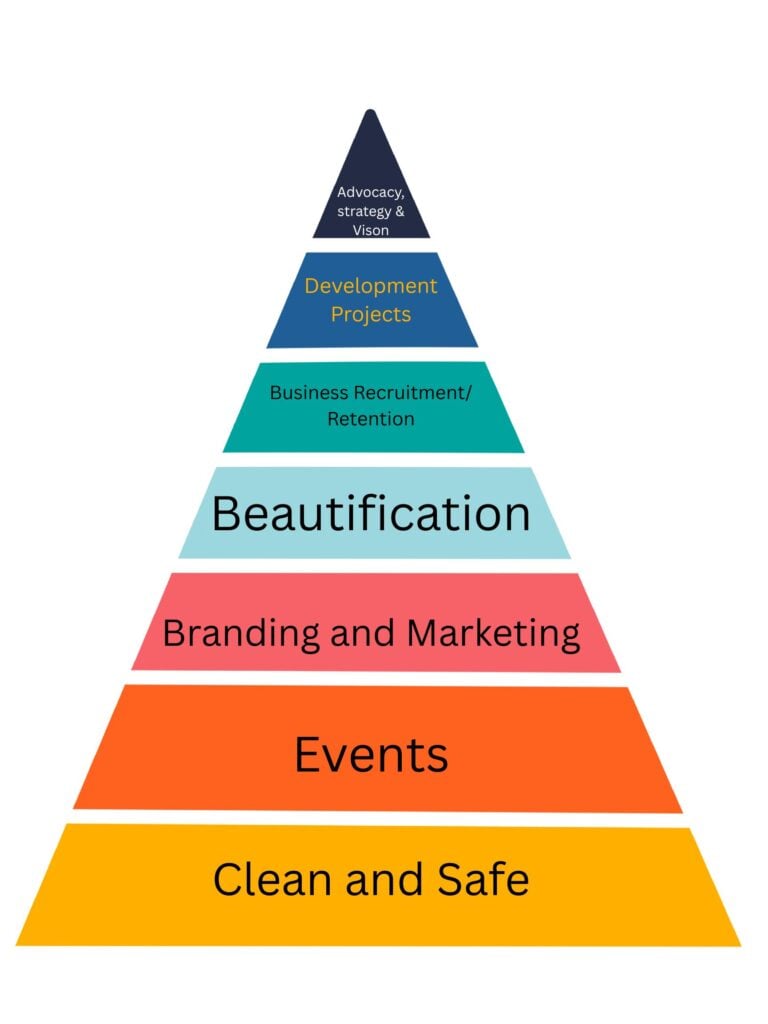
Just like the famous UPMO hierarchy of needs, before you can invite people to your home, you must first ensure it is both CLEAN and SAFE. Until America stops antagonizing the rest of the world (including our nearest neighbors and deep-pocketed travelers), the foreseeable future is vastly less reliant on international tourism. You need to pivot your audience targeting and focus on attractive drive-shed populations, while highlighting affordability.
 Years ago, media celebrity Rachel Ray ascended to popularity with her “$40 a Day” program, where she’d travel the globe while leaning into local culture to survive on $40 a day for food. This typically meant patronizing mom & pops, indie restaurants and open-air markets in search of nourishing deals on a dime. Your organization should take the same tact when revamping your content strategy for domestic budget travelers.
Feature the inside scoop, the beloved down and dirty local gems where dollar hot dogs and picnics in art-laden gardens and parks can stretch a budget into what stands in as a Depression-era vacation. For now anyway.
Things will change and as many have said before, the long arc of history bends toward justice. We can all hope that happens in 2026. Then your rebuilding begins. And bank on years of future scale and promotion. As many who’ve been through recovery can attest …you have to hit rock bottom, before you can ascend.
STRATGEIC PIVOT NO. 2
What’s Your Local UVP?
Secondly, what you need to do now is “Lean into Local”! We talk about this with clients all the time, and it’s merely a slight shift in the way we view our organizations. Pretend for one day that you don’t work at the downtown partnership, rather the local tourism bureau. How would that change your perceptions of local/regional assets? What would you promote? And how would the re-lensing impact your organization’s storytelling?
What makes the United States so unique are the hundreds of thousands of places that are part of a greater national mosaic of places, people and local cultures. Ask any Californian about the trope of being two hours from the ocean and two hours to skiing. In a country this vast, we’ve developed distinct pockets of culture, language and traditions over the past 250+ years. Ya like it hot, try AZ, TX or Florida. Into cooler climes? Give New England, the upper Midwest or the PACNW a whirl — or any place in between.
The fact is, every hamlet, village, town, city, region and state boast a slate of culturally distinct experiences for travelers. Many Americans have never ever left the country, let alone their own backyards. Promote your corner of the country as a must-see for fellow citizens. There’s a reason why “The Spirit of Massachusetts is the Spirit of America”, Virginia is for Lovers and millions of people ❤️ NY.
Don’t underestimate the impact of your local culture. Do emphasize if you have the best birria tacos, lobster rolls (butter or mayo), garbage plates, “chip chop sandwiches” or a NY-style chopped cheese in town. Regional cuisine and heart hometown faves can be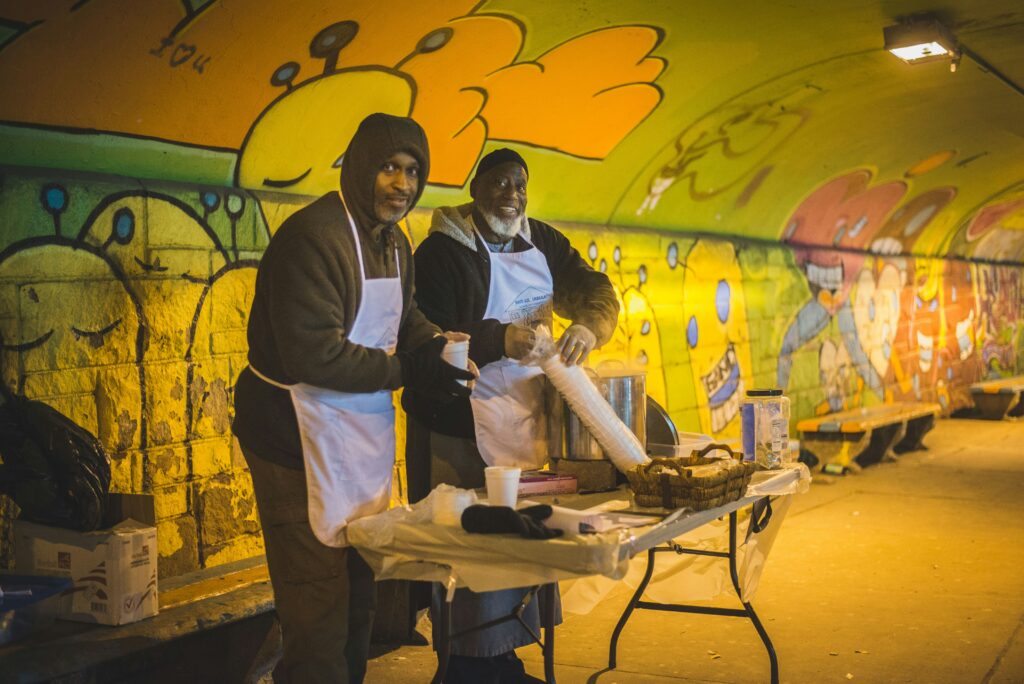 big draws for tourists, even if they’re not self-described foodies.
Is your district anchored by an iconic sculpture, historic birthplace or morbid museum? What about a homegrown omakase experience, snack factory or make-and-take experiences?. What about water? Does your district contain a waterfall, a Falling Water or a bustling Town Lake (in the middle of the desert)? What are things people can only experience in your neck of the woods? Sometimes the placemaking makes itself.
The best part is, you can reach cultural evangelists and traveling foodies alike right from your own keyboard with social media, Canva and some killer action shots. Link to and nurture your points of pride. In fact, here’s an opportunity to invite the community at large to participate in your “Lean into Local strategy” and identify your local Unique Value Proposition.
Ask your community what they’re most proud of. Run a poll on social. Collate the responses and deploy a bragging campaign of sorts, that speaks to local love, regional points of pride and attractiveness to people who’ve never even contemplated traveling to your town.
STRATEGIC PIVOT NO. 3
Of Besties and Bedfellows
Lastly, assess your content strategy, your partner network and your impacts. This entire Trends Report started with a newsletter piece we developed nearly a year ago, when we took our first stab [READ THIS LINK!] at recommending how and where to pivot and revamp your content strategy and spending. We observed, read the room and kept a pulse on the international climate as the situation has rapidly devolved, and the numbers look grimmer, month-after-month.
We again proffered advice for UPMOs just after Labor Day last September, when we recommended joining forces with your local CVB [READ THIS LINK!] to pair up on content strategy, and pony up by piggybacking off of their targeted ad spends. This is probably the most critical overhaul and partnership you can invest in today to help counter the dearth of international tourists coming to the States, while bolstering your domestic demand.
IN SUM
The Move is Yours to Make

At the end of the day, the reality is the U.S. is not going to come out a winner in the international tourism game for years to come, if ever. The mind numbingly rapid recalibration of global geopolitics will continue to impact our American towns, cities and regions foryears yet. The brand damage is done. The road ahead is long. And no amount of pleading that your place is safe will overcome the alarming disrespect and denigration of our former allies, the tangible threat of personal social media
audits to enter our country, nor prohibitive pricing that will preclude the majority of internationals boycotting US destination travel in the coming years.
Any efforts to rightsize those audiences with Americans eager to travel, explore and experience will benefit you and your ratepayers tenfold over the coming years. But you must act quickly to identify your local cultural assets, pivot your content strategies and storytell TF outta your destination with a series of strategic and collaborative efforts with other place-based entities and organizations. At the end of the day, it is our country’s ability to cooperate, lean into our diversity and band together in the face of adversarial threats that brings out the best in Americans.
We are here to help you and your downtown thrive during this unwanted and avoidable downtown. Get access to all of Bright Brothers’ free advice, trends, tips and insights by subscribing to our newsletter, the Bright Brothers Bulletin — or by reading our archives online under our Resources page.
DOWNLOAD THIS TRENDS PAPER AS A PDF HERE